Building a resilient approach to haemophilia care in Trinidad and Tobago
For people living with haemophilia in Trinidad and Tobago, the path to diagnosis and treatment has been given a major boost with help from the WFH Humanitarian Aid Program. But access to potentially life‑changing treatment is just the start of the transformational journey for helping children and adults on the island nation.
In a recent visit to the Caribbean country hosted by the WFH Humanitarian Aid Program, Dr Lydia Abad‑Franch, Head of R&D and Chief Medical Officer, and Dr Elena Santagostino, Therapy Area Head for Haemophilia, along with Sanofi representatives, met with local healthcare professionals and families who have already started to benefit from the WFH program.
“The number of people diagnosed and being treated for haemophilia in Trinidad and Tobago is very low, but that doesn’t mean there aren’t many more people who are in need of access to treatment and care,” said Lydia Abad‑Franch. “We met a small boy who had been forced to use a wheelchair for a year because of an untreated bleed. After starting prophylaxis through the WFH program, his mobility has improved, and he is getting stronger every day with specialised physiotherapy.”
Watch the video below to hear directly from healthcare professionals, people living with haemophilia and their families in Trinidad and Tobago about the impact the WFH Humanitarian Aid Program is having on haemophilia care across the country.
Delivering medicine is only part of WFH’s ambition. Equally important is understanding the broader system including the capabilities of local healthcare, current expertise, and where training and resources are most urgently needed.
Elena Santagostino explained:
“Starting the program is just the first step. WFH is assessing the full pathway from diagnosis to rehabilitation to identify what’s missing and how to build local capacity so the country can sustain high‑standard care independently. It’s about ensuring not only that the product is available, but that clinicians know how to measure inhibitors, laboratories can run the right tests, and patients receive proper physical therapy.”
Mapping capability and building confidence
During their visit, Lydia and Elena met physicians, physiotherapists, and laboratory staff to map current services and training needs. The team found practitioners face a lack of resources, there are few doctors specialising in haemostasis, diagnostic capacity is limited, and there is very little physiotherapy training specific to haemophilia management.
But now, with the commencement of the WFH program, patients have started treatment and encouraging early improvements are already being observed.
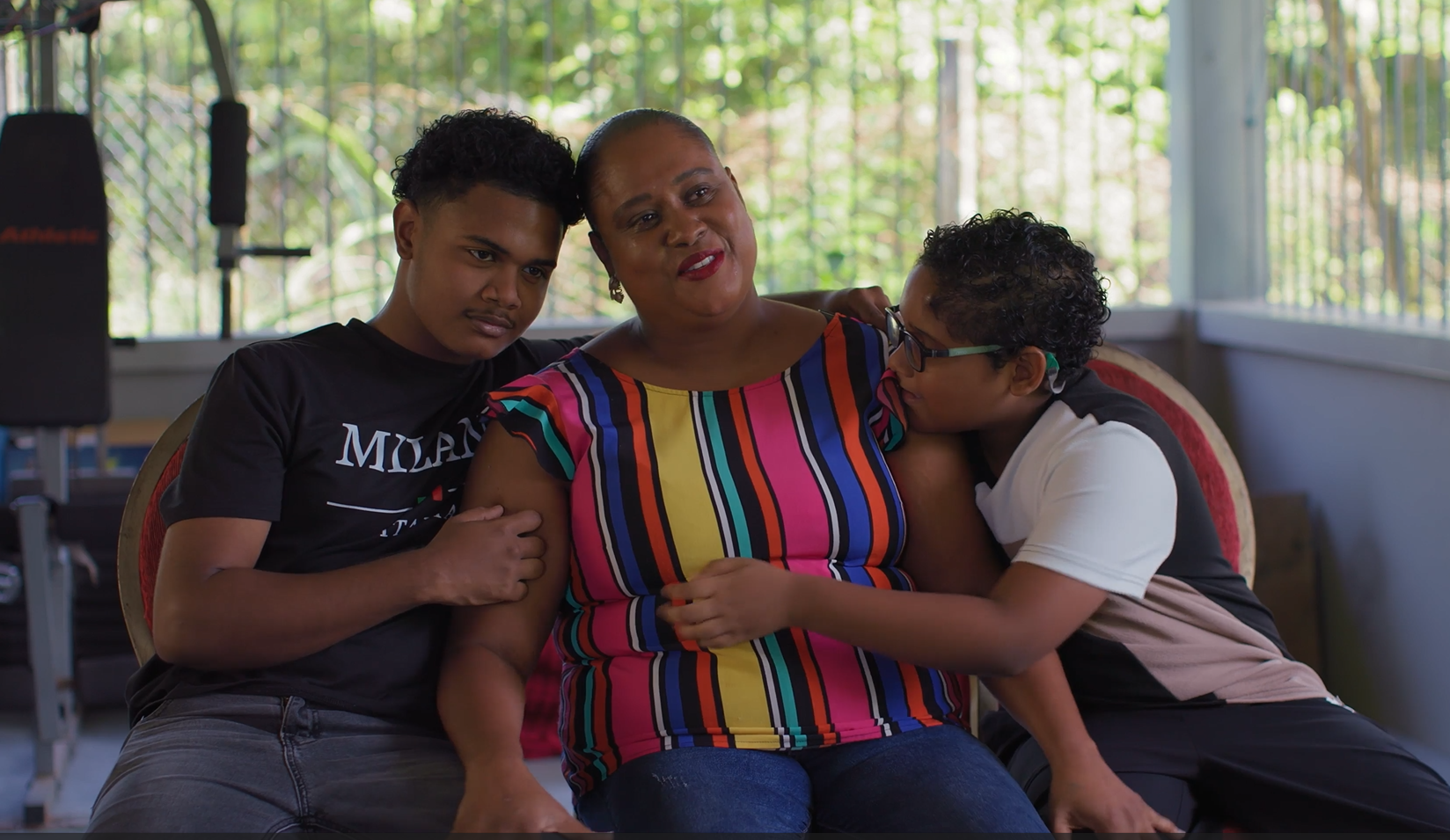
The team also met a mother of five children, including four boys with severe haemophilia. The condition was passed down through the family but had been undiagnosed. It wasn’t until the eldest child required surgery for a physical anomaly, that the underlying bleeding disorder was identified. Only then did the doctors realise the family’s history: the mother and her sister had lost a young brother decades earlier, undiagnosed at the time. The discovery brought both relief and grief, illustrating how critical early identification is in preventing loss and suffering that could otherwise be avoided.
These stories are just the start of a new era for haemophilia diagnosis and treatment in Trinidad and Tobago - and illustrate the potential impact that early diagnosis and treatment can have on quality of life. But they also underline the importance of a broader, more holistic approach that includes physiotherapy, laboratory diagnostics, and longer term, access to surgical support. Building this broader healthcare capability is a key goal of the WFH Humanitarian Aid Program.
Creating sustainability through advocacy and training
The visiting WFH and Sobi teams also met with the local patient association to identify opportunities for advocacy training. Empowering patients and families to speak for their own needs is vital in ensuring haemophilia becomes recognised as a public‑health priority. As part of the wider program, the WFH offers courses to help patient groups build advocacy skills, a crucial step in encouraging government investment and policy development for long‑term care.
Lydia Abad‑Franch noted that this advocacy is a critical part of developing robust treatment and supporting policies:
“When families gain access to consistent treatment and care, they often become strong advocates for sustaining those services over the long term. These experiences can strengthen advocacy efforts and help highlight the value of earlier and more consistent care. It becomes a shared incentive to sustain and fund better treatment.”
A foundation for future independence
Although Trinidad and Tobago’s healthcare system faces the dual challenge of limited expertise and a dispersed population, the adaptability of the WFH model provides a pathway forward with tailored training and resources to meet local needs. The aim is to integrate haemophilia care so that, over time, reliance on humanitarian support decreases as the national system strengthens.
Elena Santagostino said:
“The goal is stable use of prophylaxis and early diagnosis so that children grow up without serious complications. Every patient who receives timely treatment demonstrates what can be achieved when sustainable care systems are in place.”
For the families already seeing change, this progress means more than improved mobility, it means confidence for the future. And for Trinidad and Tobago, it marks the start of a journey towards a resilient, self‑sufficient haemophilia care system that has the potential to improve health outcomes for generations to come.
About the WFH Humanitarian Aid Program
The WFH Humanitarian Aid Program improves the lack of access to care and treatment by providing much-needed support for people with inherited bleeding disorders in developing countries. By providing patients with a more predictable and sustainable flow of humanitarian aid donations, the WFH Humanitarian Aid Program makes it possible for patients to receive consistent and reliable access to treatment and care.
The program is made possible through the generous support of its industry partners: Sanofi and Sobi, Founding Visionary Contributors; Bayer, CSL Behring and Roche, Visionary Contributors; Grifols, Leadership Contributor; and Takeda, Contributor.
To learn more about the WFH Humanitarian Aid Program, visit:
We are a global biopharma company unlocking the potential of breakthrough innovations, transforming everyday life for people living with rare diseases.
Our therapies are concentrated within the areas of Haematology, Immunology and Specialty Care.
We contribute to societies by improving access to treatment of rare diseases.
Here we present our most recent press releases, stories, news articles, and images.
Find out more about our business and financial performance.
Every day, we work actively to find better ways to understand and meet patient needs.
- About
- Therapeutic areas
- Innovation
- Sustainability
- News & Stories
- Investors
- Careers
- English
- Swedish